Zebra Technologies Current range
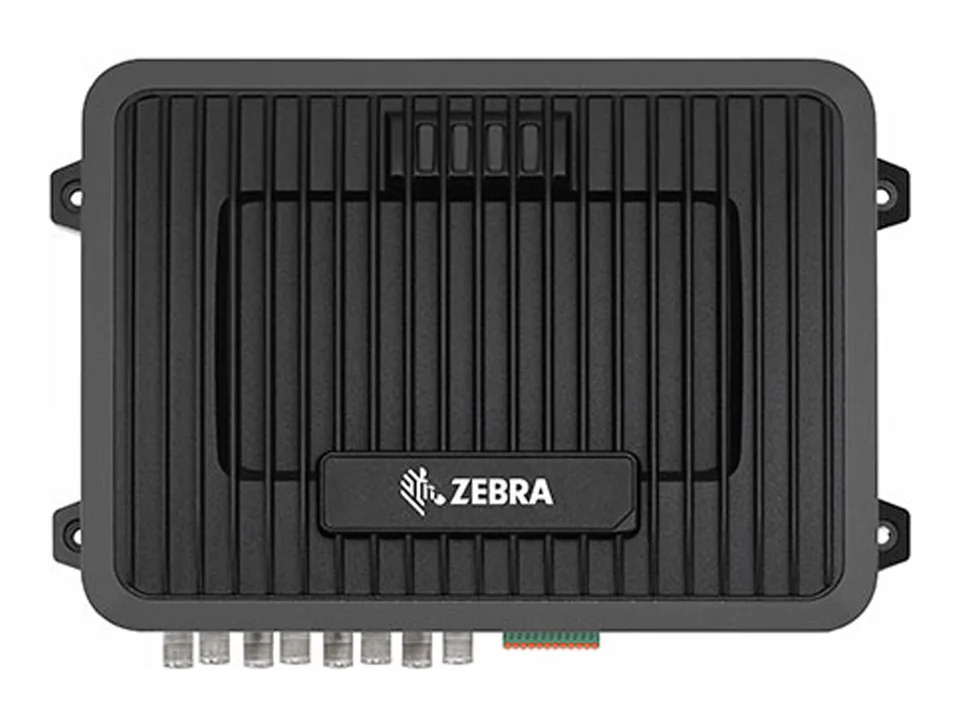
Zebra FX9600
Fixed UHF RFID reader for high-throughput read points.
RFID traceability
An RFID PDA for inventory needs a matched reader, tags and application. Compare mobile and fixed setups before specifying equipment. The FX9600 currently shown in this catalog is a fixed reader, not a PDA; a mobile configuration requires a separate selection and quotation.
1 results
Fixed UHF RFID reader for high-throughput read points.
RFID on a specification sheet does not establish tag compatibility. NFC operates at 13.56 MHz; passive UHF inventory tags use a different technology, often called RAIN RFID or EPC Gen2. An NFC-enabled PDA therefore does not automatically read UHF tags. Obtain the tag part number and protocol, then confirm reader support. A barcode scanner alone does not add UHF capability either.
Start with the operator's task: walking aisles, finding an asset or monitoring a passage. The fixed reader in this catalog addresses the third case. For mobile work, decide whether existing handhelds must be retained. A sled must match the actual host device and application; sharing a manufacturer name is not sufficient.
Scroll horizontally if not all columns are visible.
| Setup | Workflow to assess | Check before selection |
|---|---|---|
| PDA with integrated UHF | Mobile inventory in one device | Exact UHF variant, handling and application support |
| PDA with an RFID sled | Add UHF to a compatible handheld | Mounting, connection, software and charging for both devices |
| Fixed reader, including FX9600 | An installed read point at a passage | Antennas, cabling, read zone and system integration |
There is no universal RFID PDA reading distance to promise. Antenna design, tag orientation, power and surroundings affect the read zone. During inventory, capturing an adjacent shelf can be as problematic as missing an intended tag. Define the zone you want, photograph the mounting surfaces and plan trials with the actual items, including metal or liquid-containing packaging. A distance on a data sheet is not a guarantee for your site.
Record the PDA model, Android version and inventory or asset application. For example, Zebra DataWedge RFID input supports specific devices and offers duplicate-tag filtering. That does not mean a form designed for one barcode can process a batch of tags correctly. Validate the expected EPC format, the mapping to item records and the rules for creating WMS or ERP movements. Include recovery after a network interruption in your application test.
Suggested procedure, not a test result obtained by PDA.ma: assemble items with known identifiers, place a few tags outside the intended zone and repeat the operation under normal working conditions. Record expected identifiers found, missing identifiers, out-of-zone reads and time per pass. Then check that the application records only the intended stock movements. Agree acceptance thresholds before testing. A high radio-read count is not proof of an accurate final inventory.
Ask for separate costs for the reader or PDA, accessories, tags, software, integration and any trials. Have the supplier confirm the regional variant appropriate for the site, availability and lead time: a product family name is not an exact configuration. The checklist below scopes a request without assuming that a mobile reader is already stocked.
Not through NFC alone. You need integrated UHF hardware or a UHF accessory compatible with the handheld, tags and application.
No. It is a fixed UHF reader for an installation with antennas. A team moving around to count inventory has a different requirement to specify in its request.
This page does not advertise a single price. A quotation depends on the handheld, any sled, tags, accessories and integration. Include quantities and existing equipment so proposals cover the same scope.
No. Both technologies can coexist depending on tag cost, automation needs and the conditions under which items are read.
Tell us about your workflow. Our team will recommend a suitable configuration.